How Are Peptides Checked? Hplc, Coa & Pureness Clarified 2026
Peptide And Peptoid Synthesis Core The target peptide appears as a Go to this site distinct height, and its location relative to the complete optimal area shows the purity percent. A well-synthesized study peptide generally achieves pureness levels of 98% or greater. Polluted peptides show several peaks on HPLC chromatograms, molecular weight disparities in mass spectrometry, or visible particles in remedy. Independent research laboratory testing detects contamination prior to products get to researchers. Mass spectrometry supplies definitive verification of peptide identity by determining the exact molecular weight of the compound, usually to within 0.01% of the theoretical worth. High-performance liquid chromatography (HPLC) analysis is a logical strategy used to divide, recognize, and evaluate components in a blend [1] In HPLC, a fluid example (e.g. a peptide solution) is infused into a high-pressure flow of solvent with a column. Various compounds elute at different times based upon their communications with the column, and a detector produces a chromatogram (optimals of signal over time) representing each part [1] HPLC is commonly used to verify the pureness and structure of peptide examples as a result of its high resolving power and precision. At Emirates Peptides, we include in-depth CoAs with every order, providing our customers complete transparency regarding the items they get. Creative Proteomics provides peptide purity analysis solutions based upon RP-HPLC, and we have RP-HPLC columns that can meet your different speculative needs. At the same time, our knowledgeable team tailors speculative programs for customers. That's why mass spectrometry is run alongside HPLC-- it verifies the molecular weight matches the target series.
How To Examine Peptides For Pureness: A Step-by-step Strategy
For study peptides, molecular weight verification confirms the intended series, identifies adjustments such as oxidation or deamidation, and validates the absence of contaminants that may co-elute throughout HPLC evaluation. Modern tools can perform tandem MS, fragmentizing the peptide to validate the actual amino acid series. Peptides are complicated organic compounds, and the accuracy of your study depends upon the precision of the product you utilize. However, the on the internet market for peptides is swamped with unproven sources and irregular purity levels. That's why Peptides Laboratory UK executes a two-layer confirmation system, incorporating independent lab testing with third-party validation via Optima Labs-- to assure scientific stability.Column Option
A committed coalition of biochemists and clinical scientists focusing on sophisticated peptide synthesis and medicinal applications. Our research study group curates evidence-based web content on peptide science, making sure all posts are based in peer-reviewed literature and present scientific understanding. Quantitative results in high-performance fluid chromatography (HPLC) are normally based on calibration with requirements and peak-area measurement.How much time does an HPLC examination take?
Time Required for HPLC EDTA Test Reports + Next Steps

Reliable Hplc Lab Offering Hplc Evaluation Solution, And Hplc Screening Services For Over 20 Years!
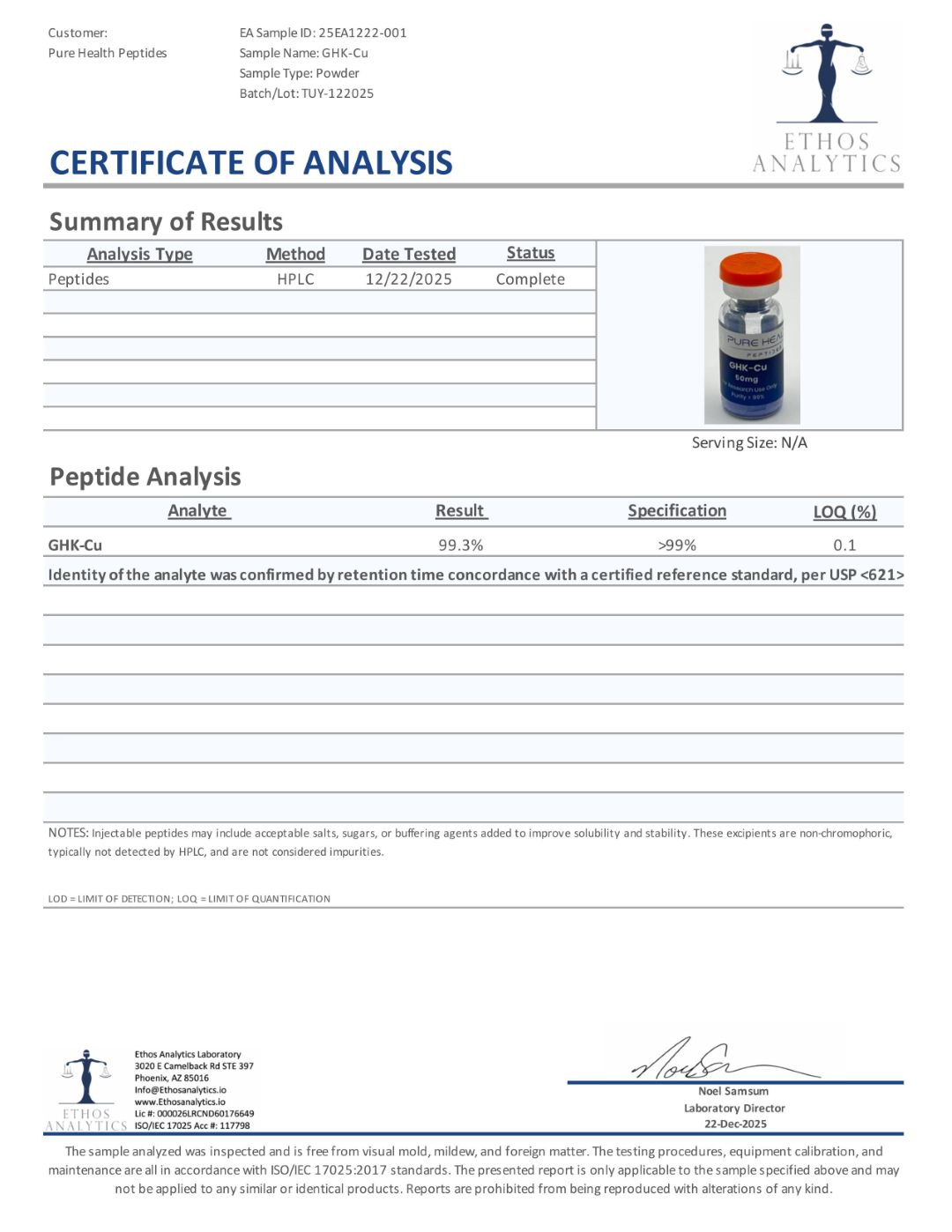
The location under the primary peptide top, contrasted to the complete location of all optimals, identifies the purity percentage. Research-grade peptides generally show a dominant top standing for 99% or even more of the overall location, with very little pollutant tops. Exact analytical recognition is vital to validate peptide Research Laboratories identification, purity, and security. Our solutions include HPLC and mass spectrometry screening to ensure that peptides meet research-grade demands.- In practical COA review, the term normally describes purity screening, identification screening, and documents evaluation.
- If a peptide is re-tested after storage stress and anxiety, HPLC can disclose whether brand-new pollutant optimals have appeared or whether the major height area has actually decreased.
- It is an area-percent purity dimension, not a complete identity or task examination.
- HPLC measures splitting up and loved one peak location; mass spectrometry measures mass-to-charge actions that can be used to confirm molecular identity.
- This overview explains the 3 gold-standard logical methods-- HPLC, mass spectrometry, and third-party screening-- and exactly how researchers can interpret results to verify that their compounds satisfy research-grade high quality criteria.